
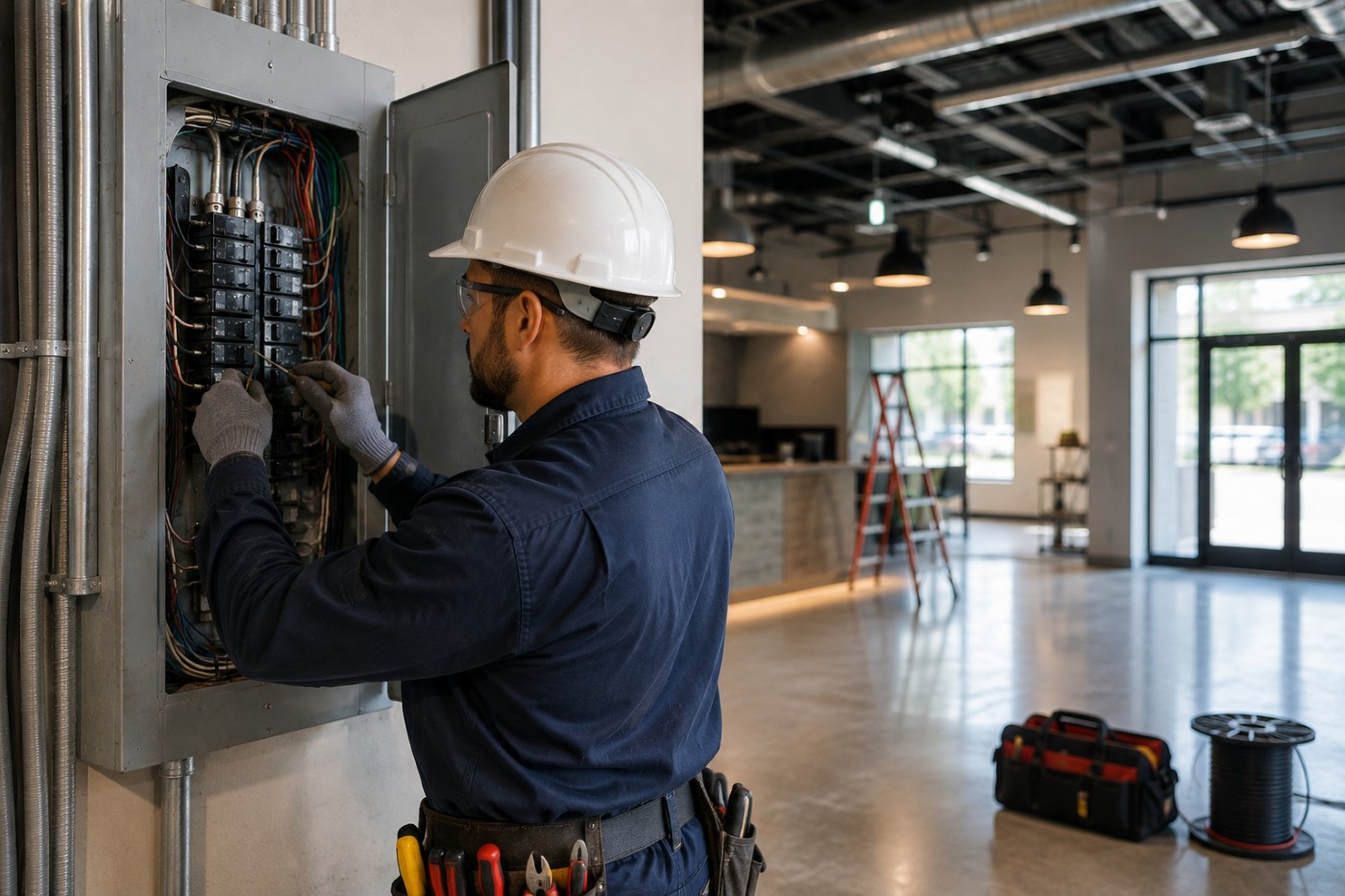
If you own or manage a business, the electrical system behind your walls is easy to ignore until something goes wrong. But commercial electrical work covers far more than fixing what breaks. Whether you are opening a new space, expanding, or keeping an existing building safe and compliant, understanding what commercial electrical work includes helps you plan projects and budget with fewer surprises.
Boston Light & Power handles both residential and commercial electrical work across Milton and the South Shore. This guide breaks down what commercial work actually involves and how it differs from the residential jobs most people are familiar with.
How Commercial Electrical Differs from Residential
Commercial electrical work operates at a different scale and under different rules. Businesses often run on three-phase power rather than the single-phase power in homes, which supports heavier equipment and higher loads. Code requirements are stricter, inspections are more involved, and the consequences of downtime are measured in lost revenue rather than inconvenience. That is why commercial work demands an electrician who understands both the technical and the business side of keeping your doors open.
What Commercial Electrical Work Covers
1. Wiring and Rewiring
This is the backbone of any commercial space, from running new circuits for equipment to rewiring an older building that no longer meets demand. Tenant fit-outs, where a space is wired for a new business moving in, fall under this category and are among the most common commercial projects.
2. Lighting Design and Installation
Commercial lighting is about more than brightness. It covers efficient layouts, energy-saving LED retrofits, emergency and exit lighting required by code, and lighting that fits how your space is actually used. Good lighting lowers operating costs and improves the experience for customers and staff.
3. Electrical Panels and Service Capacity
Businesses add equipment over time, and the electrical service has to keep up. Commercial work includes panel upgrades, subpanels for specific areas or equipment, and service capacity increases so your building can safely power everything it needs to run.
4. Code Compliance and Inspections
Commercial buildings face a stricter code environment than homes, and staying compliant protects you from failed inspections, insurance problems, and liability. A commercial electrician ensures your system meets current Massachusetts electrical code and handles the permit and inspection process on your behalf.
5. Dedicated Circuits for Equipment
Commercial equipment, from kitchen appliances to machinery to server rooms, often needs dedicated circuits sized to its specific load. Getting this right prevents nuisance tripping, protects expensive equipment, and keeps your operation running smoothly.
6. EV Charging Stations
More businesses are adding EV charging for customers and employees, whether a single station or a small bank of them. Commercial EV charger installation involves load planning, and sometimes a service upgrade, to support charging without straining the rest of the building.
7. Safety Systems and Emergency Power
This includes emergency lighting, exit signage, and in some cases backup power arrangements so critical systems stay running during an outage. For many businesses, these are not optional, they are code requirements tied to occupancy.
8. Preventive Maintenance
Commercial systems benefit from scheduled maintenance in a way most homes do not. Periodic inspections catch loose connections, overloaded circuits, and aging components before they cause an outage or a failed inspection. For a business, a small planned visit is almost always cheaper than an unplanned shutdown, and it keeps your documentation in order for insurers and inspectors.
Planning a Commercial Project
The best commercial outcomes start with planning rather than reaction. Bringing in a licensed electrician early, whether for a build-out, an expansion, or a capacity review, lets you sequence the work around your operations and avoid the far higher cost of emergency fixes and downtime. A good commercial electrician thinks about your business, not just your wiring. That means working around your hours where possible, keeping critical areas powered during phased work, and being clear about timelines so you can plan staffing and customers around the job.
Work With a Licensed Commercial Electrician
Commercial electrical work is not the place to cut corners. It calls for a licensed professional who knows Massachusetts code, understands commercial-scale systems, and respects that your time and your business are on the line.
Boston Light & Power is a licensed Massachusetts electrical contractor (MA Master Lic. #24281-A) serving businesses across Milton and the South Shore. Call (857) 855-7899 to talk through your commercial project and get a clear plan.
24/7 Emergency Electrical Service
Electrical emergencies do not wait for business hours, and neither do we. Boston Light & Power offers 24/7 emergency electrical service across Milton and the South Shore. If you are facing a burning smell, sparks, a hot panel, or a sudden loss of power, call us right away at (857) 855-7899. Our licensed electricians are ready to respond day or night.
Frequently asked questions
Electrical Emergency? We Answer 24/7.
Burning smell, sparking outlet, hot panel or sudden power loss? Boston Light & Power provides 24/7 emergency electrical service across Boston, Milton, Quincy, Braintree, Weymouth, Hingham, Scituate and Cohasset. Licensed electricians, every hour of every day.
Call (857) 855-7899 NowPlanning a commercial electrical project?
Tell us about your space, equipment, and timeline. We will assess the work and give you a clear plan for completing it safely and to code.
Related pages
This article is general information, not a substitute for an on-site evaluation by a licensed electrician.